
Relations
Where your relations stand, country by country, from −100 to +100, on the map or in the ranking. They warm or cool with your choices; click a country to open its card.
 PoliEconia
Windows · Steam · Early Access spring 2027
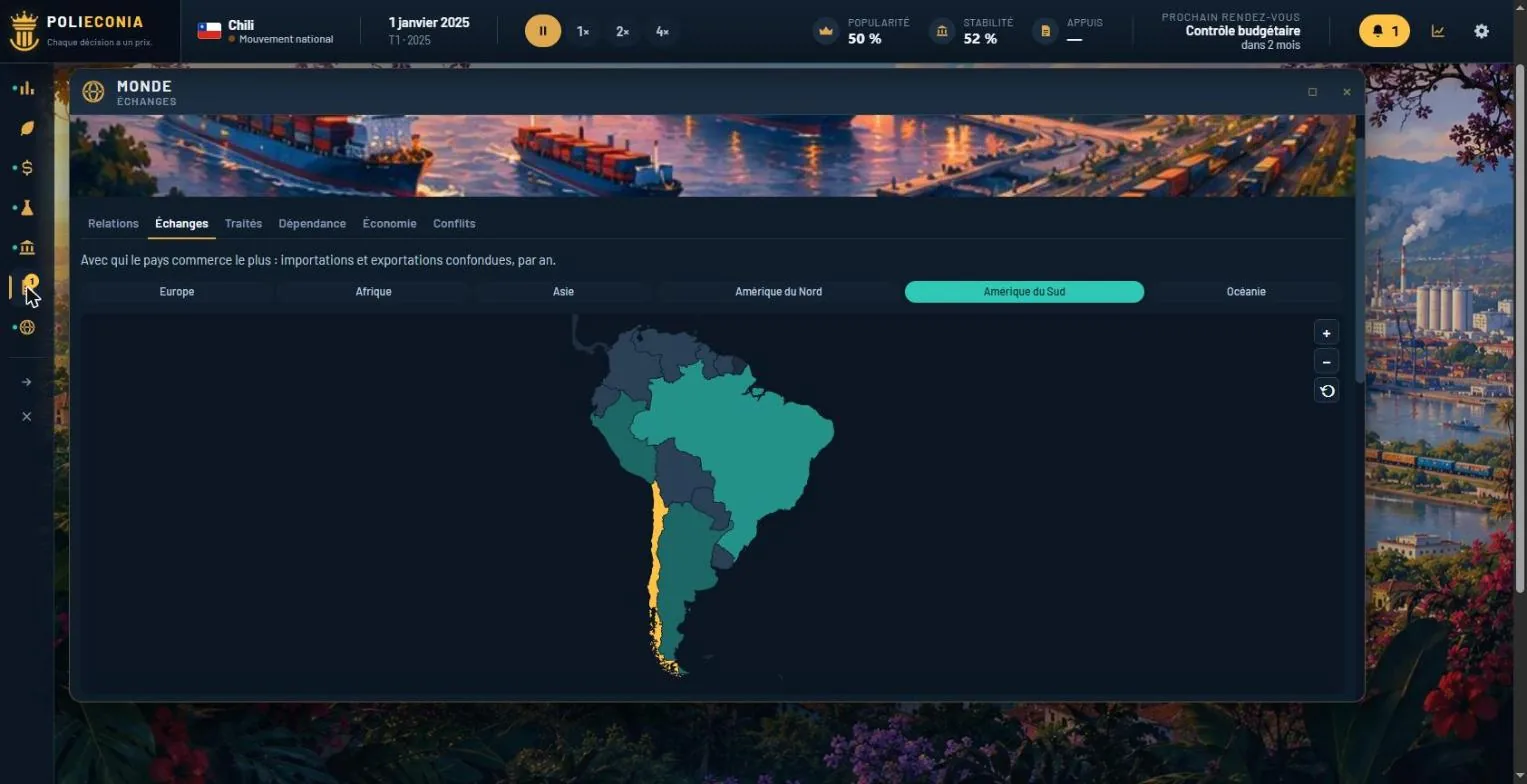
You govern one of 114 playable countries; the other 113 trade, source, sanction and go to war around you. The World menu shows who you trade with, who you depend on, and what each of them could do to you by cutting you off.
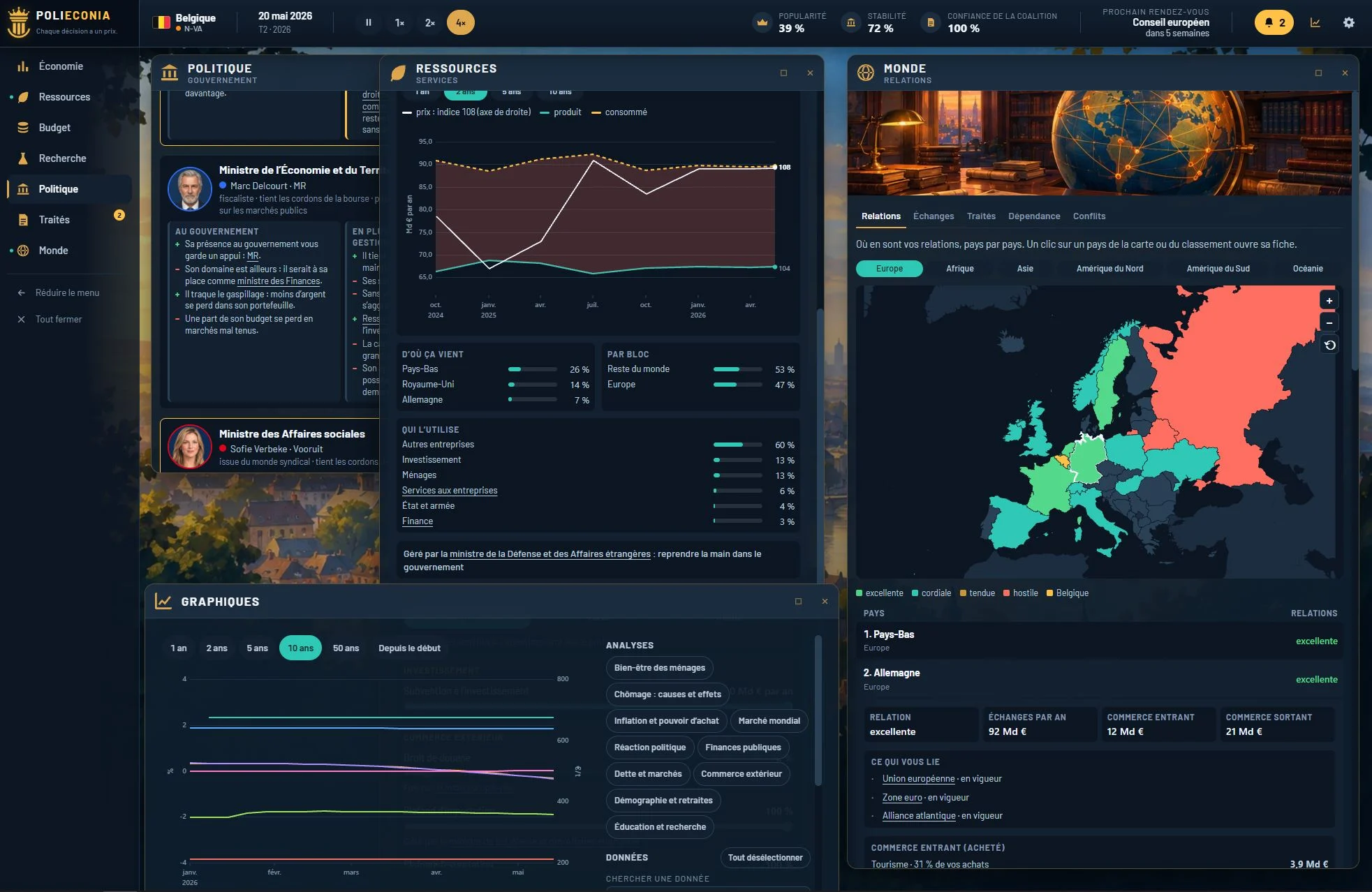
Where your relations stand, country by country, from −100 to +100, on the map or in the ranking. They warm or cool with your choices; click a country to open its card.
Who your country trades with most, imports and exports combined, per year and continent by continent. The Economy tab adds partners' growth, inflation and debt, from the IMF: a partner in recession buys less from you.
Who is bound to you by a treaty in force, and who is targeted by your sanctions. The treaties themselves are negotiated in the Treaties menu.

Who sells you what. The darker a country on the map, the more it sells you what you cannot do without: that is what it can do to you by cutting you off.
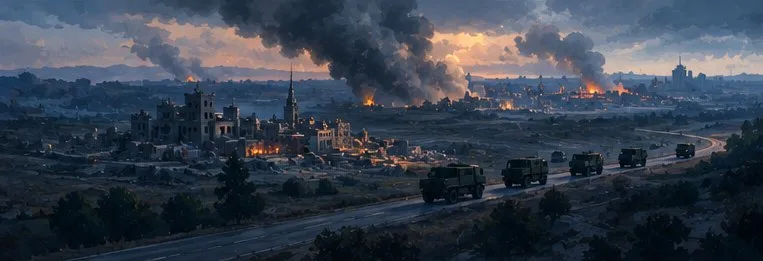
The wars under way in the world. You command no army there: a war is weighed through aid and sanctions.
The other 113 countries are not scenery. Among themselves they found one or two treaties a year, make offers, vote on memberships and launch sanctions. They belong to real blocs: 37 unions, common markets, customs and monetary unions, alliances and forums, from the European Union to Mercosur, from ECOWAS to the Gulf Cooperation Council, from ASEAN to the BRICS.
Your suppliers and customers fall into six blocs: Europe, North America, China, Russia and allies, the Gulf, the rest of the world. For every product, the game shows the share of your top three suppliers that belongs to each union: enough to know who could cut you off together.
PoliEconia is not a war game. The conflicts under way appear in the World menu, but your country commands nothing there: it weighs in through the aid it grants and the sanctions it decides, both set in the Treaties menu. Power is played in the accounts, the ports and the parliaments.
Recorded on the development build of the game: the numbers will change before release.
Yes: a geopolitical simulator and a grand strategy game without war, for PC, combined with a management game. You govern one of 114 playable countries, and each of the other 113 holds a relation with you, trades, founds treaties and launches sanctions. It is as much a political simulator as an economic one: power is won through trade, diplomacy and the economy.
No. The wars under way are visible in the World menu, but you command no army: a war is weighed through aid and sanctions, decided in the Treaties menu.
Countries decide together to cut off a target country's sales and purchases with their members. You can found such a treaty, join one or lift your own. The sanction redirects purchases: whatever the target supplied has to be found elsewhere, often at a higher price.
Yes. They found one or two treaties a year among themselves, make you reasoned offers, vote on memberships and launch their own sanctions, according to the mood of the world chosen at the start.
37 real unions: common markets, customs and monetary unions, alliances, forums and a sanctions regime. Among them the European Union and the euro area, USMCA, Mercosur, the Eurasian Economic Union, the Gulf Cooperation Council, ASEAN, ECOWAS, the BRICS and the G20.
You set it at the start: calm, with no embargo or sanction and frozen conflicts; real, where governments behave as history shows; or hostile, with the same governments quicker to sanction and break ties.
PoliEconia is being tested on full playthroughs, country by country. Leave an address: one message when the game opens, nothing else, with a one-click unsubscribe link.