Who is behind PoliEconia
An independent developer in Belgium who waited a long time for a political simulation where trade would matter more than tanks. The engine, the data and the interface are all home-made, and the game is built on playthroughs played to the end, country after country, so that every number holds up. Feedback from players of this kind of game is welcome, and read.
Questions about PoliEconia
What kind of game is PoliEconia?
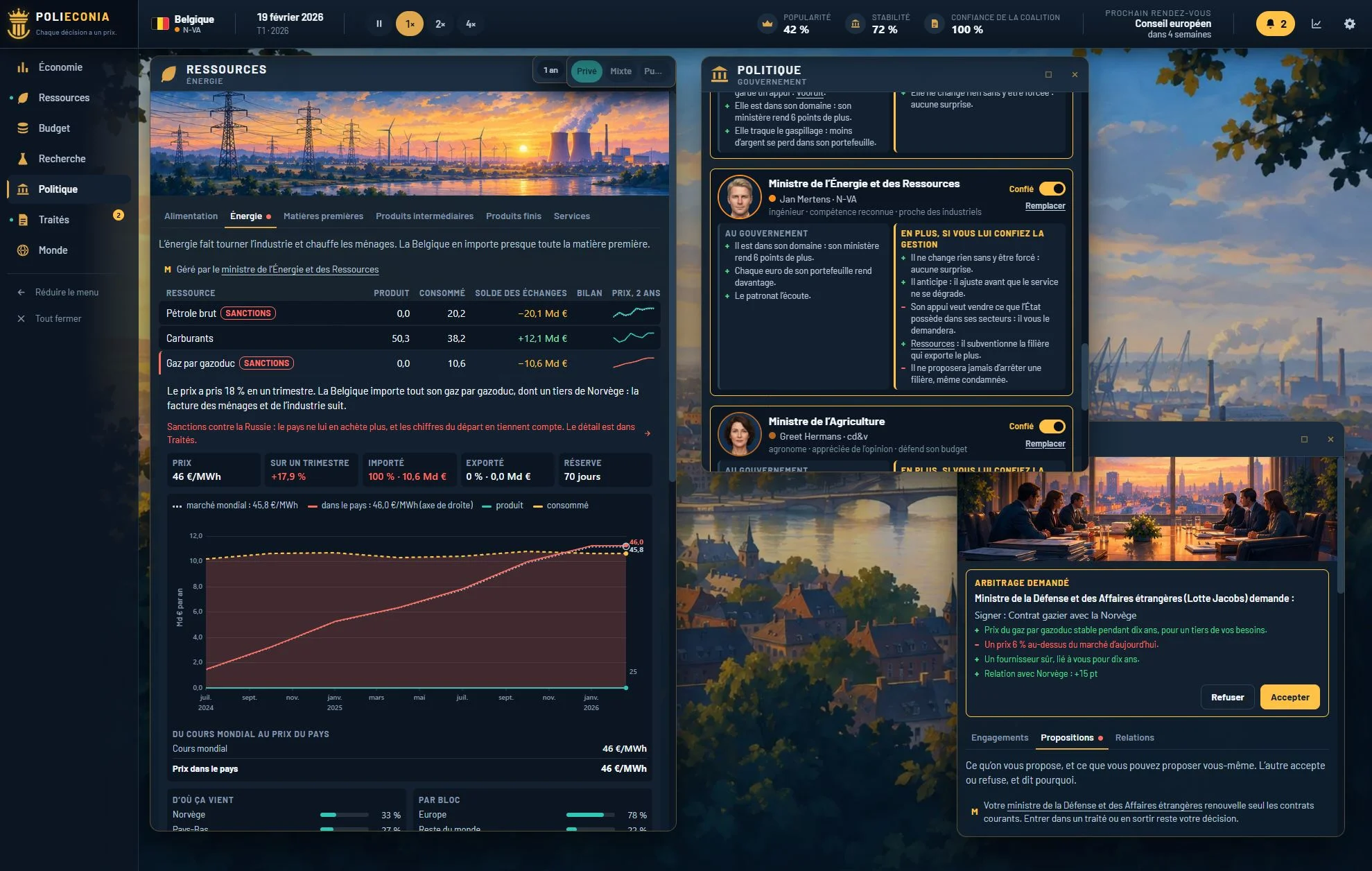
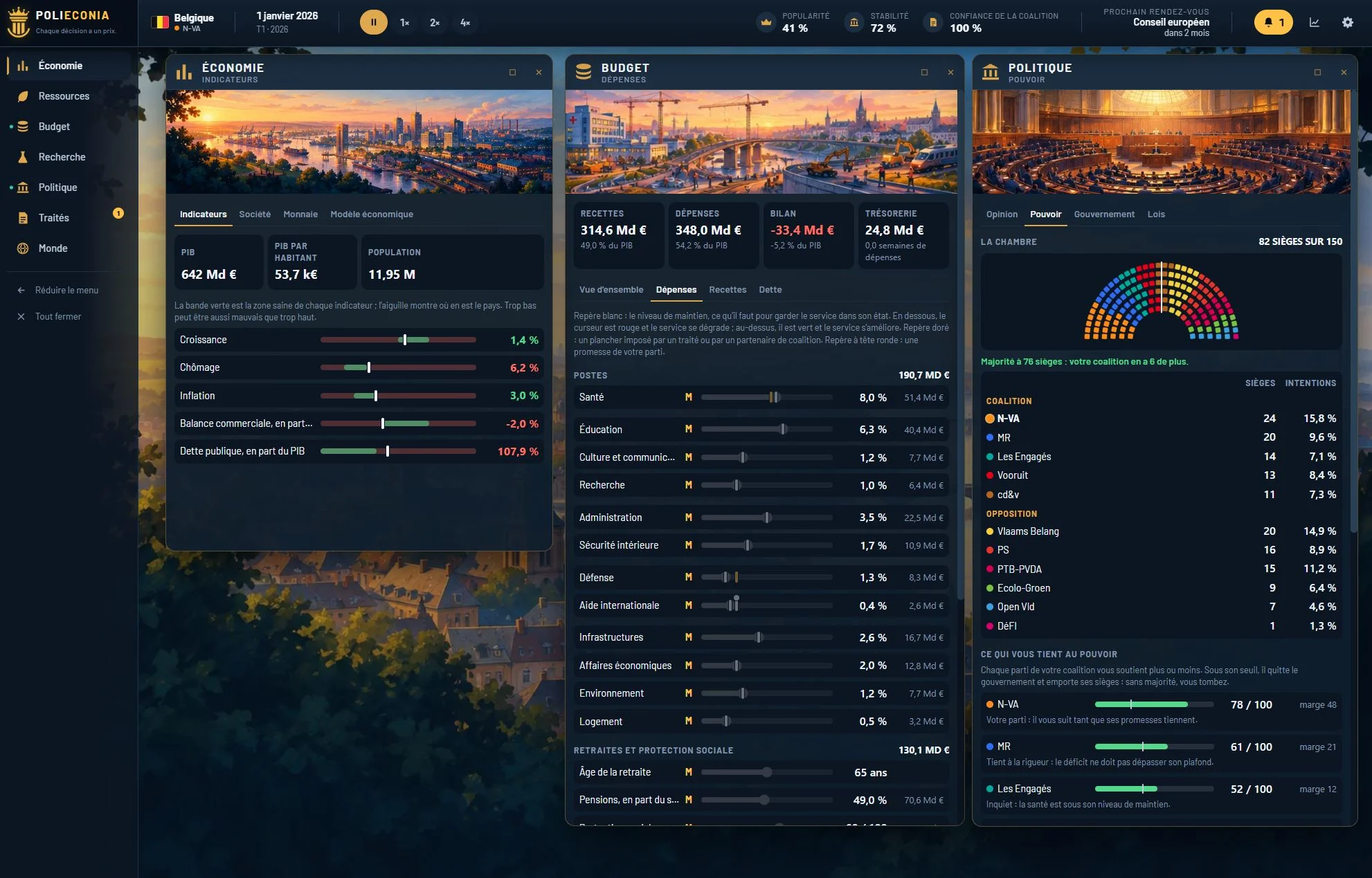
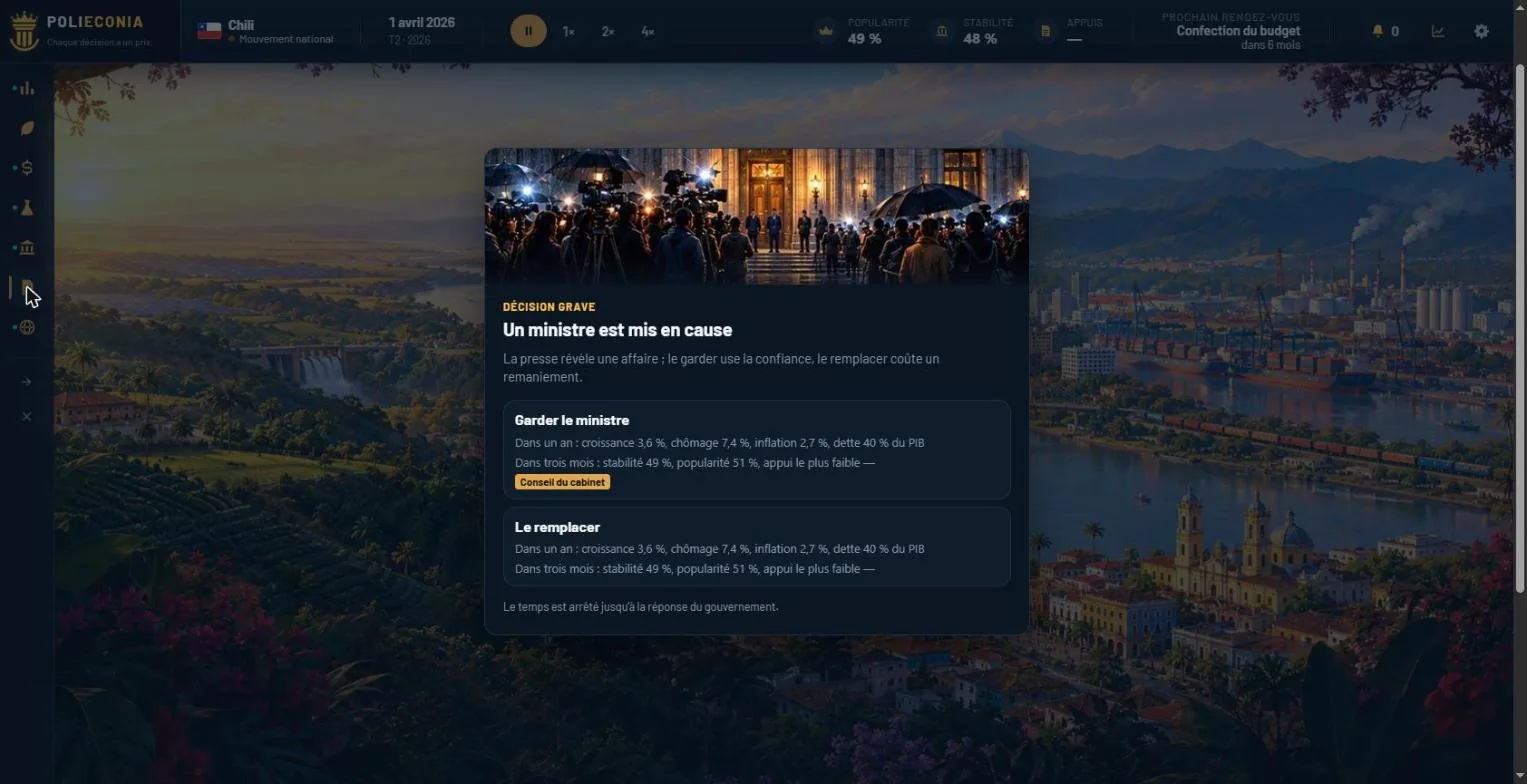
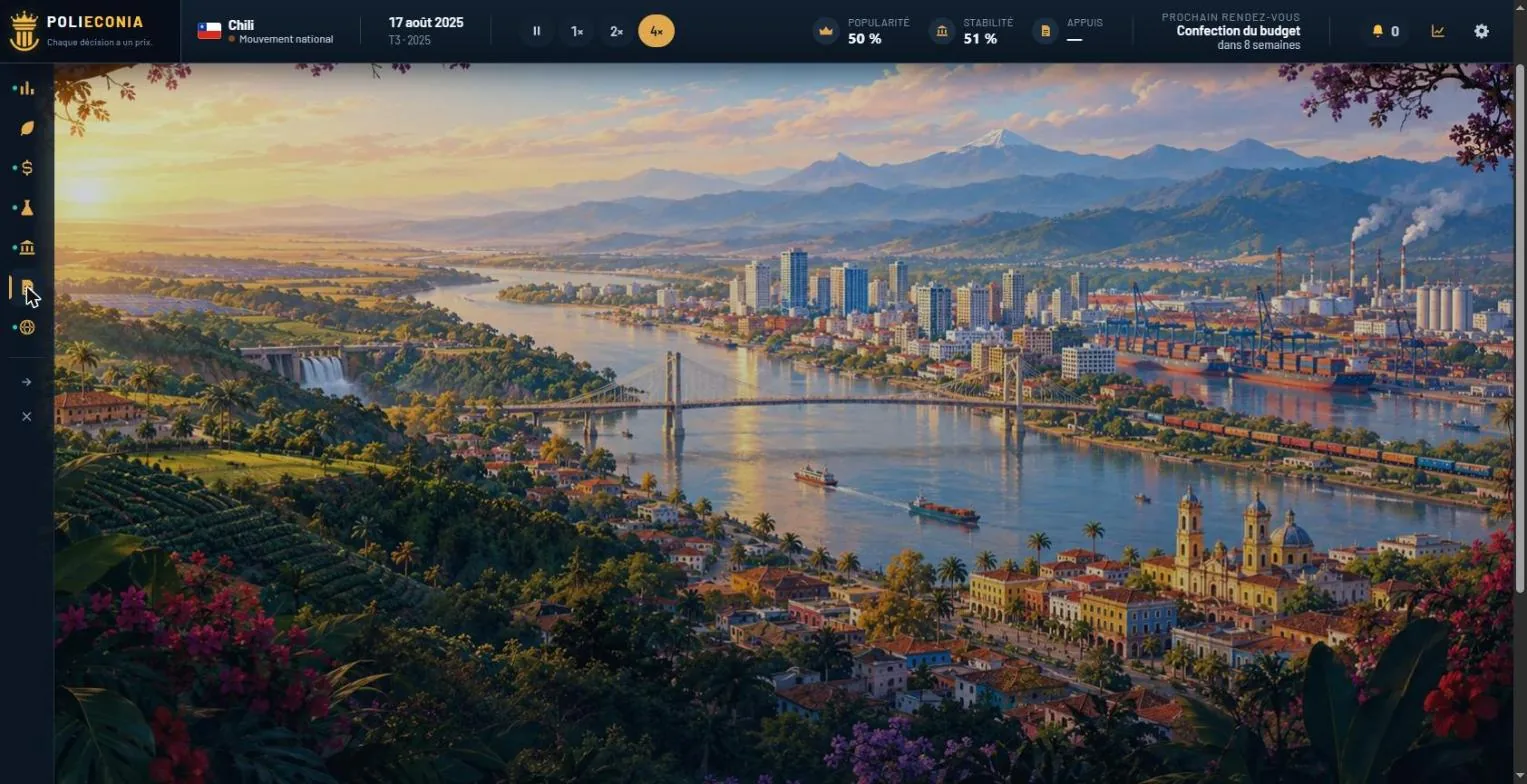
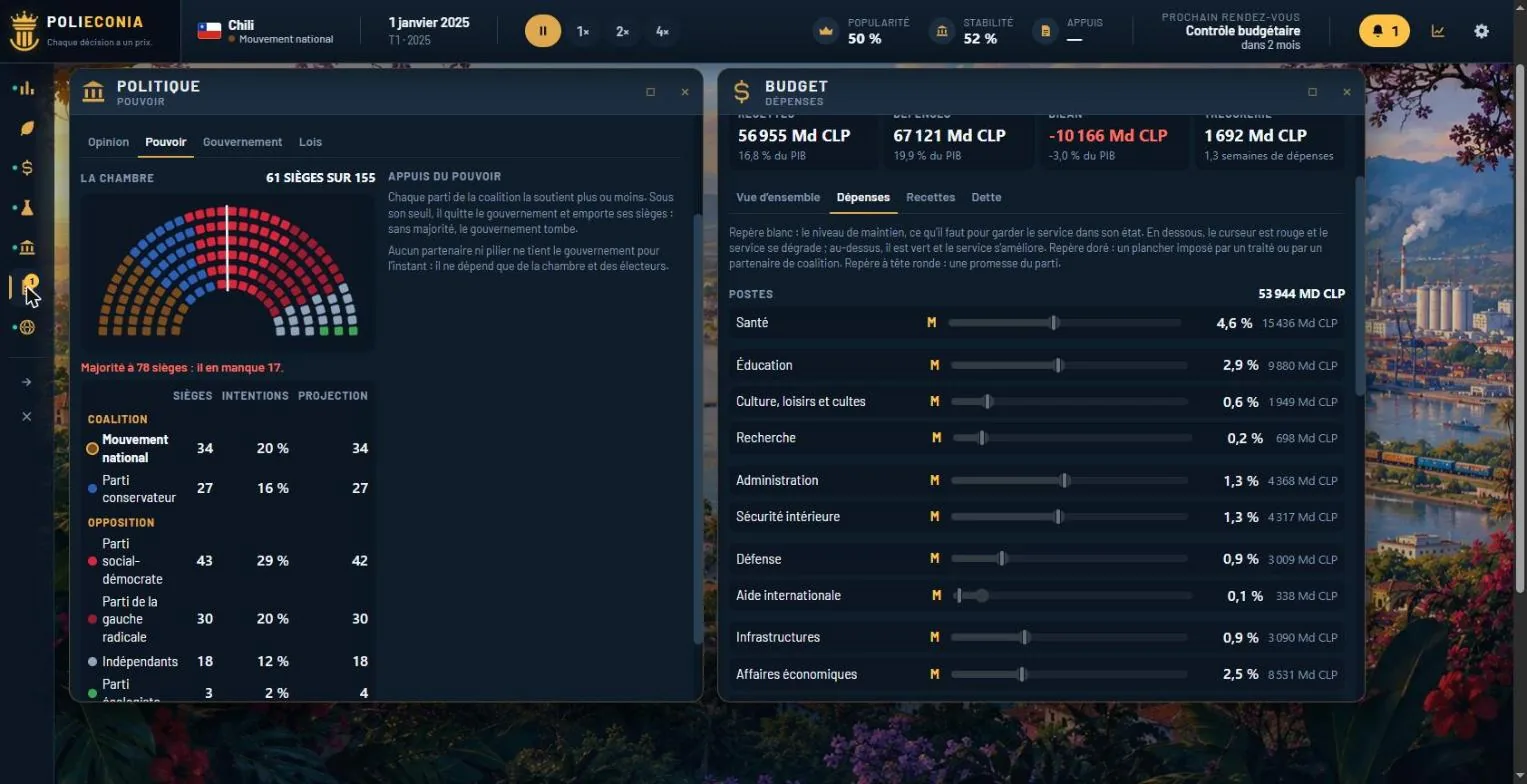
A deep management game combined with a geopolitical and economic simulation. You lead the government of a real country in a world that trades, sources and sanctions: you set your choices, time runs at the speed you want, and the country and its partners respond.
How important is world trade?
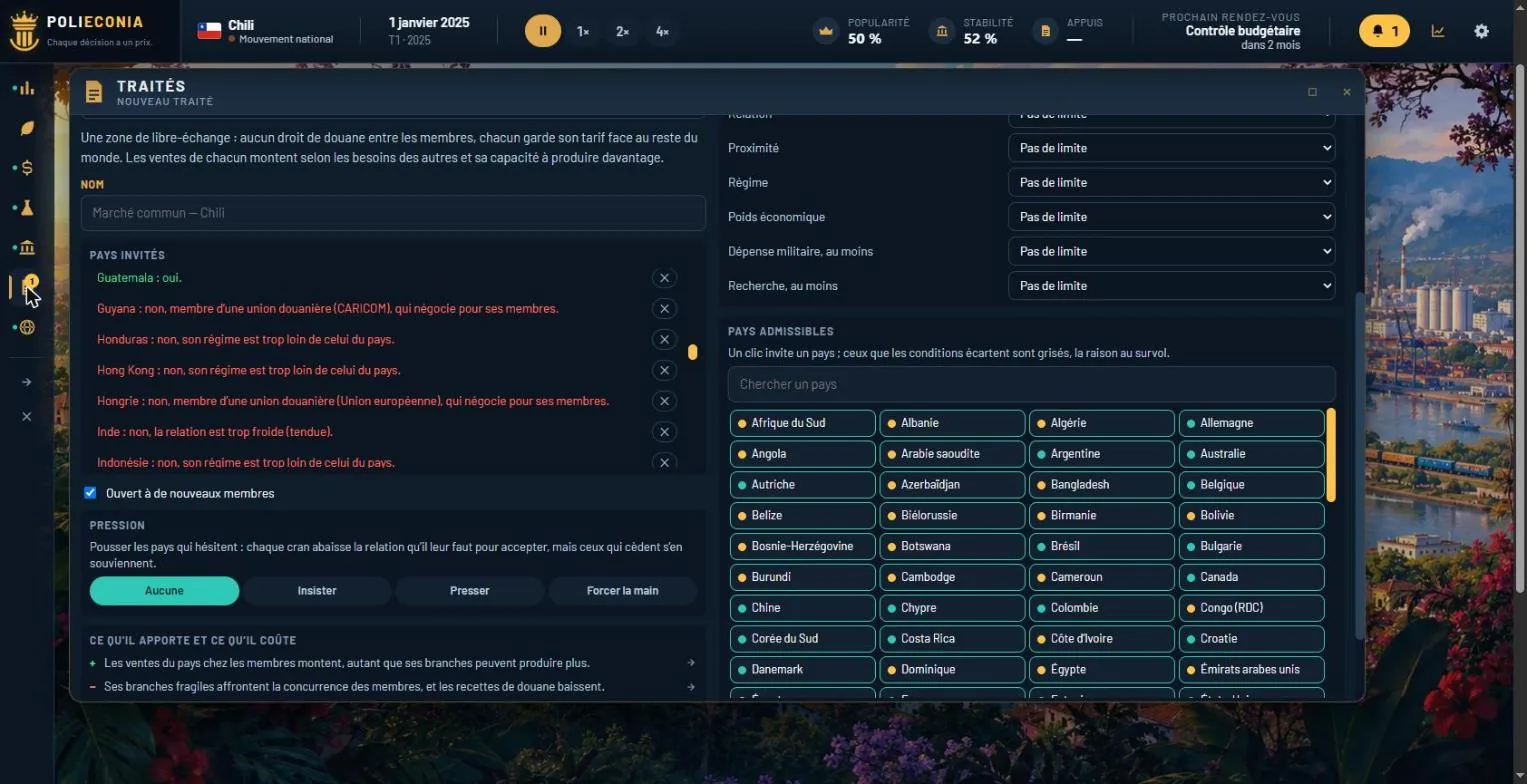
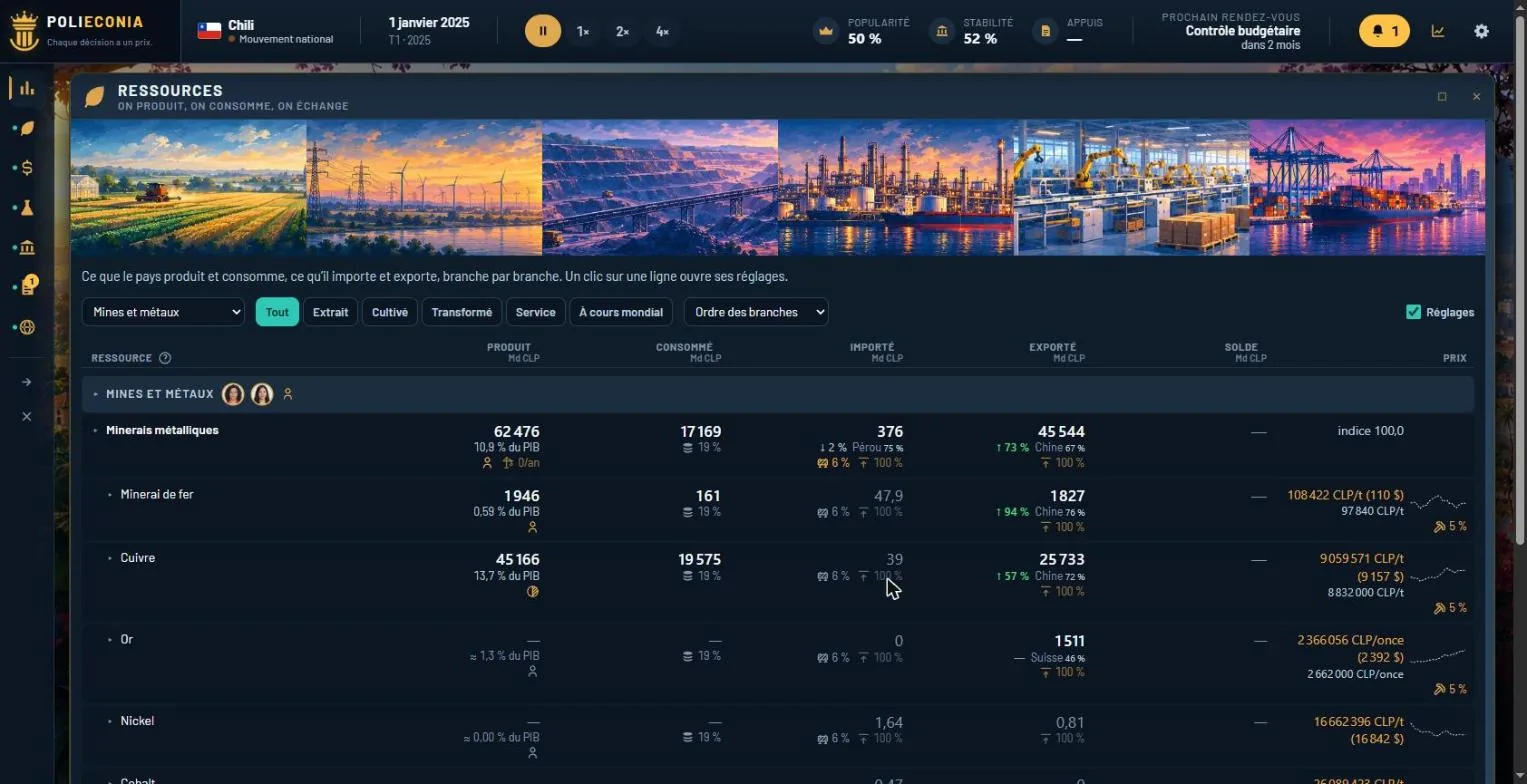
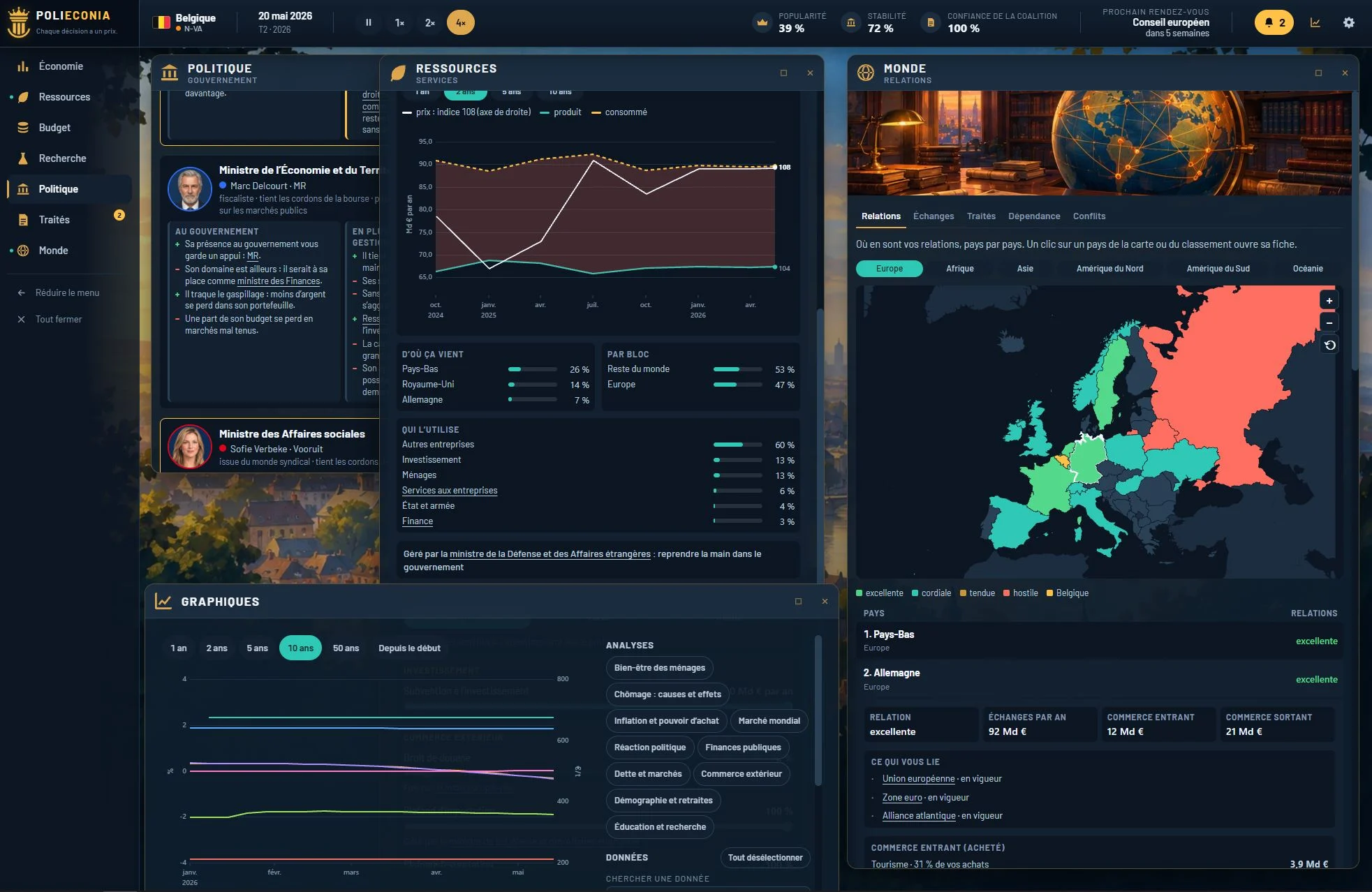
Central. Fifty industries, from wheat to oil and from semiconductors to weapons, and twenty-nine commodities tracked on their markets, where prices follow supply and demand. You see who supplies you with what, and what each major bloc could do to you by cutting its deliveries. Tariffs, import caps and sanctions are decided, and suffered.
Is it a war game?
No. Power is played through the economy, trade and diplomacy: there is no army to move on a map.
How many countries can you govern?
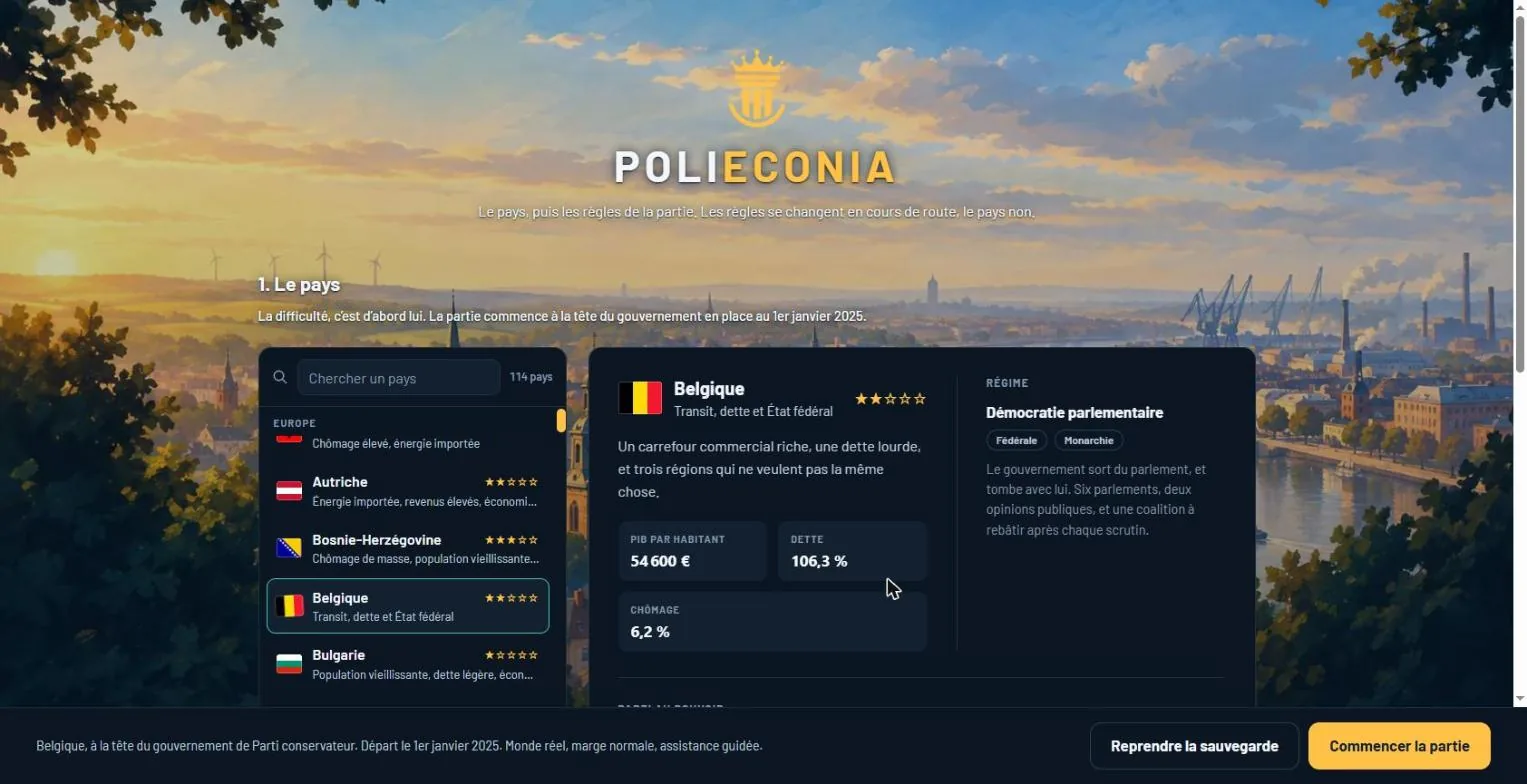
114 countries across every continent, each with its regime, its parties and its starting position. A rich, indebted parliamentary democracy does not play like a young country that subsidises its bread and fuel.
Where do the game's numbers come from?
From official institutions such as the IMF, the World Bank, the OECD, the WTO and the Bank for International Settlements, plus around a hundred other public sources. The 44.7 million data points collected since 2000 were used to calibrate the engine: its reactions come from real data, not made-up numbers. Each game then starts from the country's real accounts, trade flows included, which the engine moves month by month according to your decisions.
Can you lose the game?
Yes. If your coalition walks out or the voters send you home, you leave office. Balancing the budget is not enough: you also need to keep a majority.
How long is a game?
As many years as you hold on to power. Time runs day by day, paused or accelerated, and every election is a verdict.
Do you need to know economics?
No. The game is deep, but it explains what it shows: every label opens an explanation, the economic gauges open onto their details, and guided mode lets your ministers run things at the start.
What does it run on?
First on Windows, through Steam. Mac and Linux are being looked into.
When does it come out?
It will launch first in Early Access on Steam; we are aiming for spring 2027. Until then, the game is being tested on full playthroughs. Leave your address: you will get one message when it opens, and nothing else.